Modern Wood Fence – Step 6: Almost Done…

04/11/2011

When Jason and I had a rare Saturday together with nothing scheduled, we took advantage of the time to work like crazy trying to finish the fence. We got up early (a feat in itself) and worked up until evening when we had friends coming over for a dinner party. We were working so quickly and efficiently that I couldn’t stop and take pictures along the way. But I can tell you what we did. A lot more nailing planks, cutting planks, nailing planks and cutting planks. We just have one area left, near the deck:
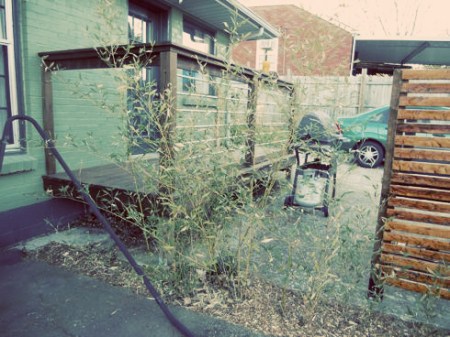
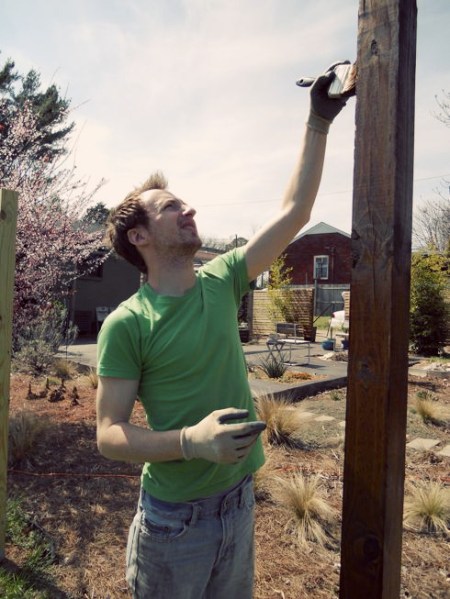
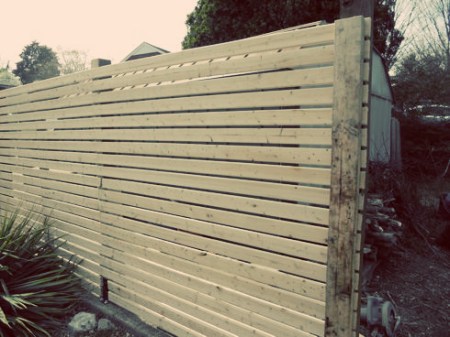
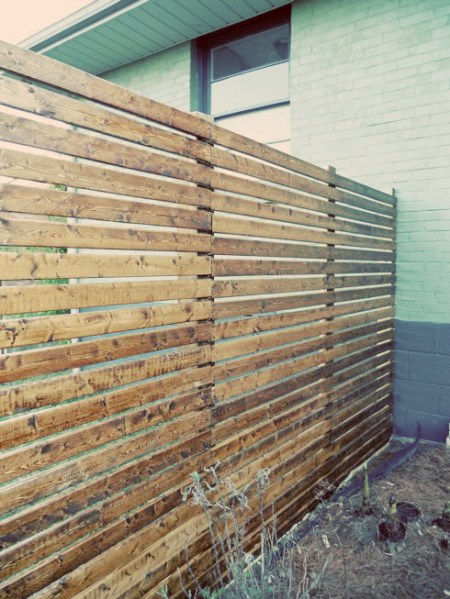
When I came home from work one day last week I found Jason staining the fence with deck sealer. He was able to finish the inside but hasn’t had a chance to stain the outside yet.
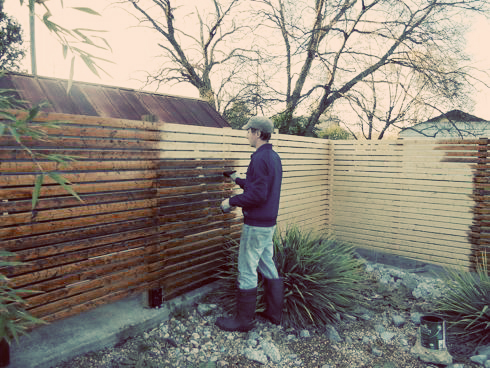
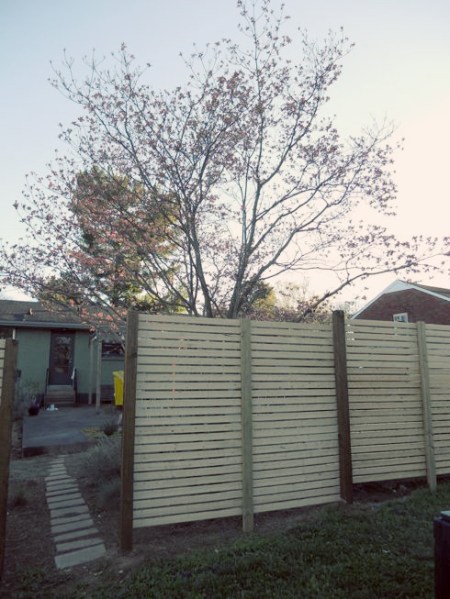
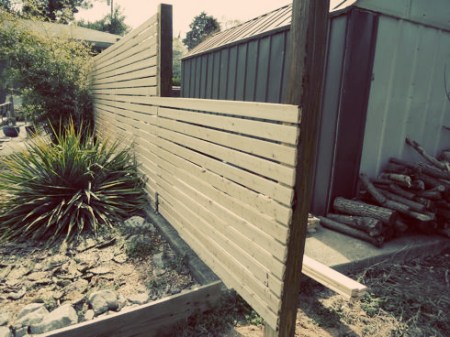
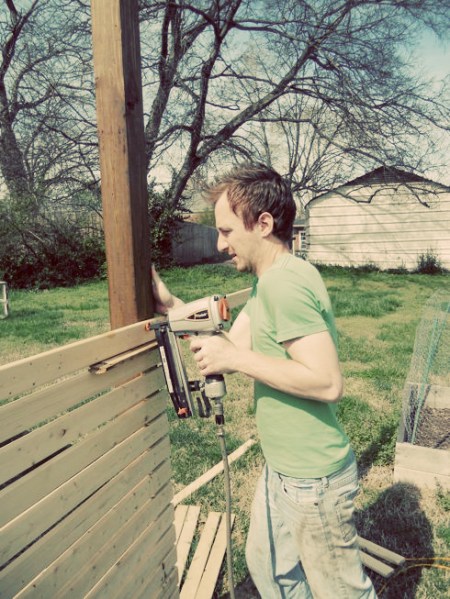
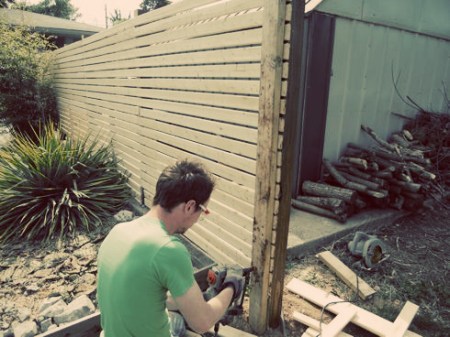
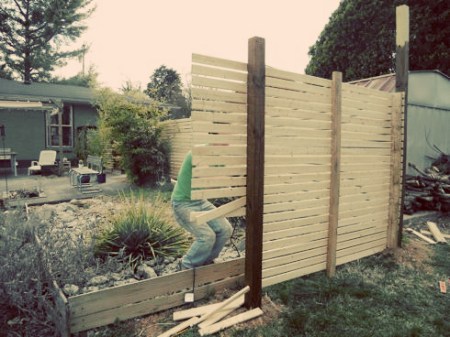
This section (the one on the right) is especially dear to me. Why? Because I nailed it all by myself. After absorbing the shock of 5,000ish shots from the nail gun, Jason’s shoulder needed a break. While we waited for the ibuprofen to kick in so we could keep up our pace, I took over nailing a section. Clearly, I’m quite proud of myself.

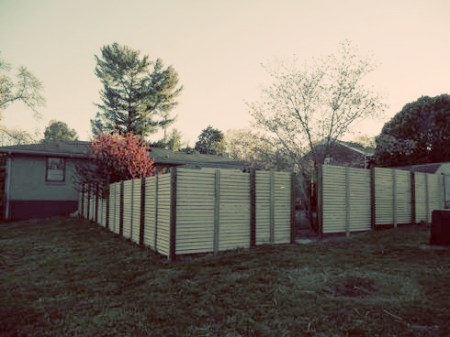
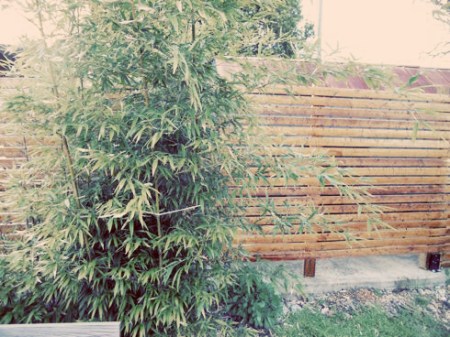
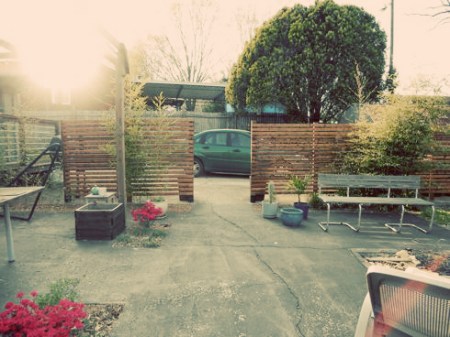
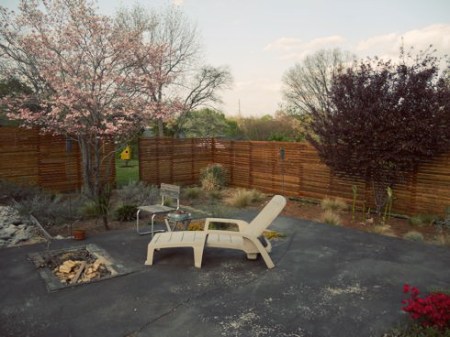
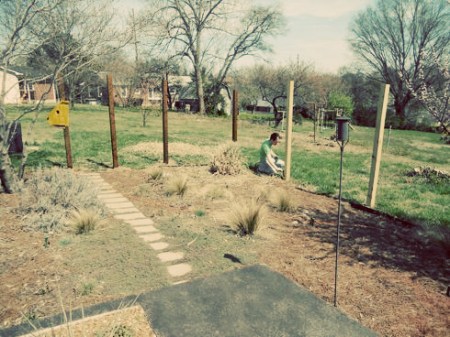
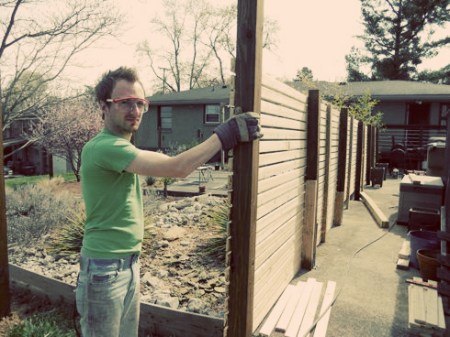
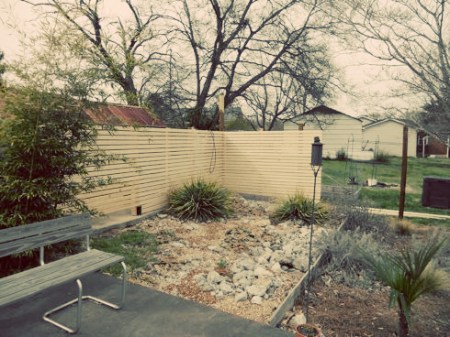
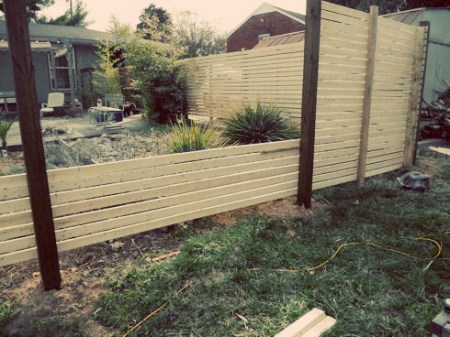
Jason is definitely faster at though, and it’s hard work, especially above elbow height so I was happy to hand the gun back over to the boss. Here are some pictures of the rest of the fence which is mostly finished from the inside.

The last post against the house is a 2×4 that is not sunk into the ground. Eventually we’ll get around to anchoring it into the mortar of our brick house. For now, it’s wedged tightly enough that it’s holding the fence up straight.
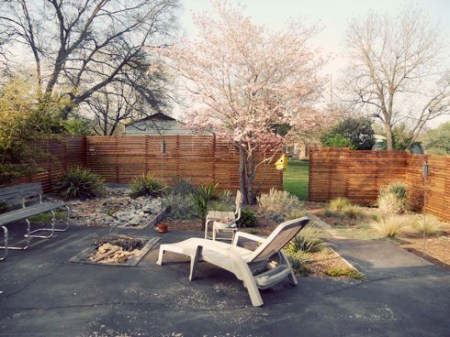
Side note: this dogwood tree looks amazing this spring!
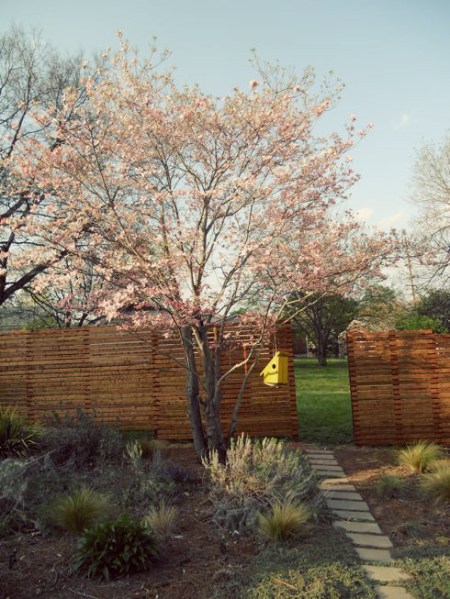
Side note: the bottom of the birdhouse is falling off. Thankfully no birds live there. Actually, that’s probably why no bird live there.

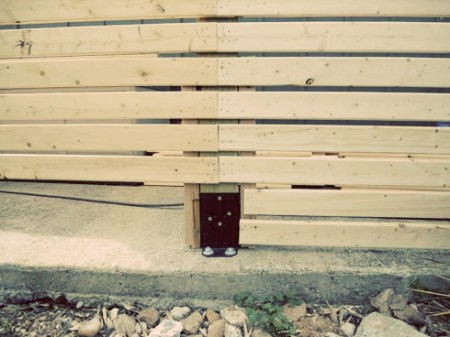
We’re really please with how it turned out. We still have some areas along the bottom that need closed up, in addition to more staining, finishing the area around the deck and adding 2 gates.

————————————————————–

Step 1: InspirationStep 2: PlanningStep 3: PostsStep 4: Progress, Step 5: Transport


Modern Wood Fence – Step 5: Transport

04/04/2011

I tricked you… my last update on the fence showed our progress of staining, nailing planks and troubleshooting and I said the next update would be more of the same. Jason and I worked really hard all day on Saturday trying to take advantage of a rare day off together and the gorgeous weather. We worked so fast that I didn’t stop to take a single picture. Except for this one of our last load of wood from Lowes.

These are our vehicles. We don’t have a truck, a van or an SUV. (Although we secretly wish we had a minivan!)  We have compact and mid-size sedans and we make them work. We lost track of how many roundtrips to the hardware store it took us to get all the wood for the fence. Probably around 7 or 8 trunk-loads.

Lowes was running a sale the past 5 days that was definitely working in our favor. With every transaction we were given a coupon for $10 off our next purchase of $50 or more. Each trunk-load cost approx $100 so we saved at least $30 this weekend with our last 3 trunk-loads. We weren’t planning that or trying to cheat their system, it just happened that way.

Pictures of the actual fence progress will be coming soon. We have a couple more sections to finish with planks, a few troubleshooting areas, some finishing details, 2 gates to make and a whole lotta staining left to do.

————————————————————–

Step 1: InspirationStep 2: PlanningStep 3: Posts, Step 4: Progress


Modern Wood Fence – Step 4: Progress

03/31/2011

I don’t have a concise title for this post. I was going to call it staining posts, spacing and nailing planks and troubleshooting but that seemed to long. Also, the next step is going to be more of the same.

I failed to take any pictures while we worked on this first side of the fence so here it is. You’ll notice that about half-way between each 4×4 post (that’s either anchored to the concrete with an EZ Post bracket or concreted into the yard) Jason added another vertical 2×4. Each plank is nailed to this 2×4 to keep the planks from warping or bowing out between the 4×4 posts, which are a little less than 8′ apart.

This is where we left off when we had to go buy more wood. We just have a sedan so it takes a lot of trips to the hardware store to get all this wood.

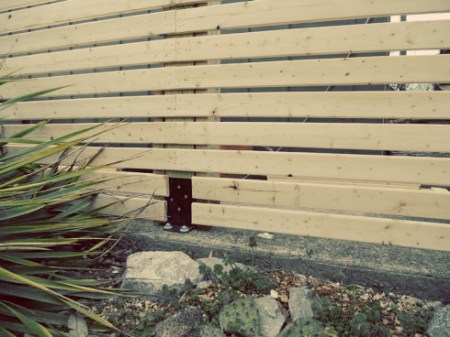
Our handy EZ Post brackets cause a minor predicament because the planks couldn’t be nailed into the post for the bottom 6″ or so. That is enough room for pesky disgusting cats to get into our garden. Not acceptable.

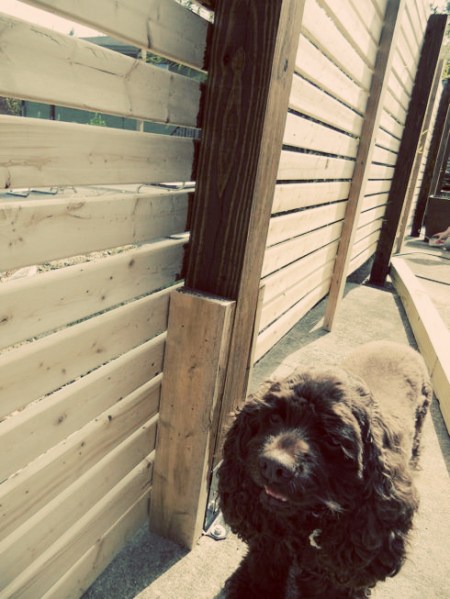
Jason came up with this solution to add 2x4s along the sides of the posts at the bottom so he’d have something to nail the planks into.

That works.

Here’s a look from the other side. Lucy approves.

We’re using this scrap of wood as a spacer to make all the planks equal distance apart. When we’re working together (and I’m not taking pictures) it moves a lot faster because I get the next plank ready and place the spacer while Jason does the nailing. (Oooooh… I love those sexy arms!)

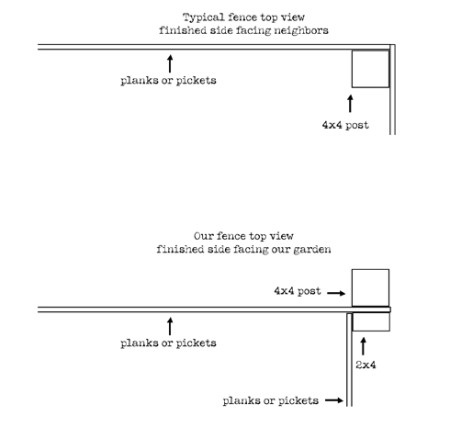
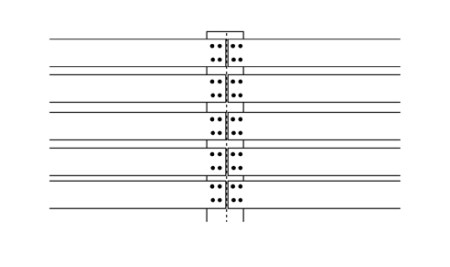
Proper fence etiquete is to put the outside, finished side of the fence facing your neighbors and to put the backside facing your own yard. Because this fence is not going around the perimeter of our yard—and we may some day add a perimeter privacy fence–we opted to put the finished side facing in. That created another slight problem when it came to the first corner. Jason came up with a clever solution using a 2×4.

Here’s an illustrated top view of the corner solution:

Nice and clean looking on the inside corner.

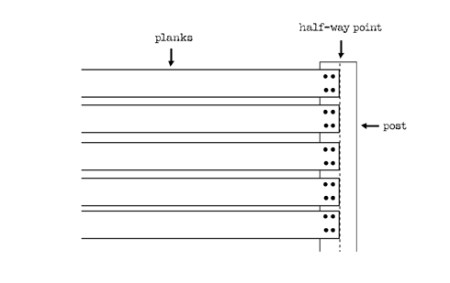
We’re using 8′ long planks and we purposely put the fence posts less than 8′ apart so we could trim off the excess and get all the ends clean and square at every post. Jason set his circular saw to the depth of the planks (they’re 1×3’s so approx 0.75″) and trimmed off the ends of the planks at the center point of the post.

It’s fun to watch.

Here’s what the other side of the post looks like. The planks are cut at the halfway point of the post so that Jason has room to nail the planks for the next section of fence.

We may or may not have learned this lesson the hard way on the first post: make sure you put all the horizontal plank nails only into one side of the post.

Because in the next step, you’ll be adding more planks to the other half of the post.

Excess post is cut off with the circular saw. (We got one 10′ post for this corner because of the height variance from the patio down to the yard. Not necessary, obviously.)

So here is where we left off. Out of wood. Out of time. And it got cold out.

We’re hopeful we can get it done in the next couple of weeks. Notice where Jason started testing out the stain/sealer.

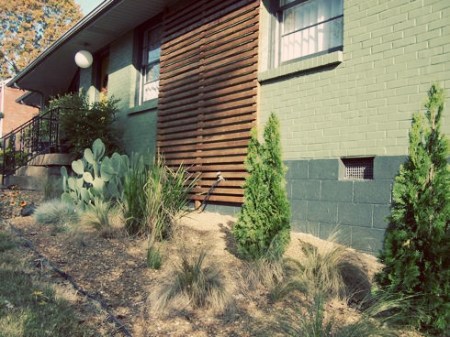
The finished fence should end up looking just like this architectural trellis on the face of our house:

————————————————————–

Step 1: InspirationStep 2: Planning, Step 3: Posts


Modern Wood Fence – Step 3: Posts

03/22/2011

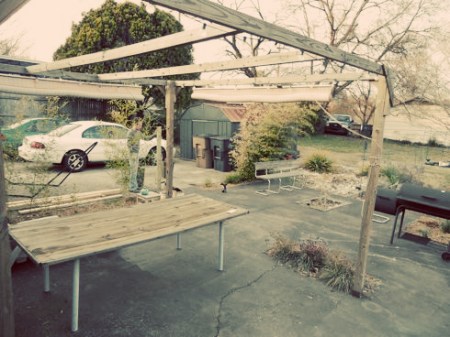
Our fence plan required 19 posts, 6 of which needed to go across concrete to divide our parking area from our patio. We wanted the fence height to be 5′ on the patio side—high enough to create some privacy and division but not too high that our friends can’t peak over and say hi when they arrive for a cook out. We were able to by 10′ 4×4 posts and have them cut in half at Home Depot. Obviously, we needed 3 posts for this. Here’s a sort of before shot, where Jason is checking the height to make sure it’s good. I was standing at our back door to that this shot.

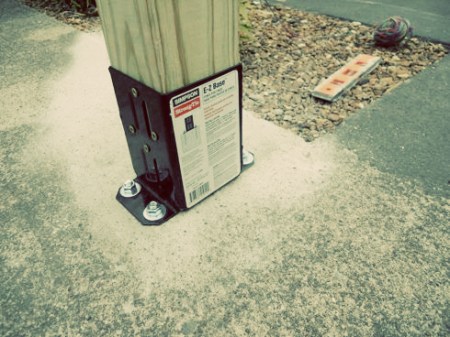
You can’t dig post holes in concrete, obviously. Jason’s had some experience with attaching fences to concrete in the past so he knew stability can be tricky. We found these great E-Z Base post bases at HD that are made just for this purpose. They’re hard to find and a bit pricy (around $15 each) but they work great. Four deep screw holes need to be made with a powerful hammer drill. We found some handy 4″ concrete anchors in the same section at the store.

The trickiest part of using these E-Z Bases was getting them onto the 4x4s. They’re made to fit as tight as a glove for obvious reasons. We found the best technique was to get them partly on the post with our hands and then slam the post and E-Z Base against the ground. It took a few slams but the post would gradually slide down into the base all the way. They’re very sturdy. Jason is making sure they’re straight and level.

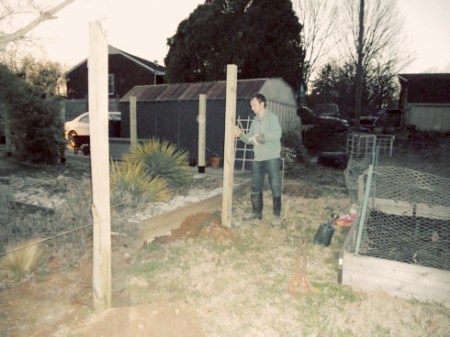
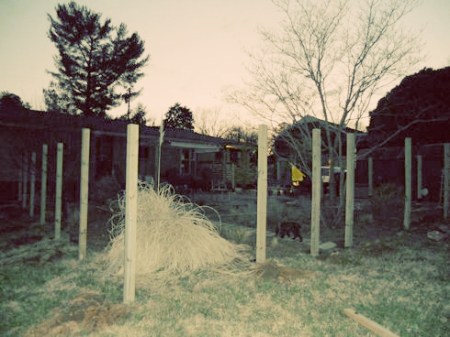
The rest of the posts were done the regular way. We have a manual post-hole digger and Jason is a post-hole-digging-machine. He got the 11 holes dug, 2′ deep, in a matter of hours. We got 8′ 4×4 posts for the rest of the fence. With 2′ underground, we’ll still have plenty left to get a level 5′ fence and trim the tops off the posts. Jason bought fence post concrete to put in each hole. (Who knew they made that?! It’s fast setting!) Half a bag of concrete and half a gallon of water was needed for each hole. Concrete is cheap. It dries so fast it and it wasn’t windy so most posts didn’t need any additional support and Jason was able to level them as the concrete was setting.

I helped Jason level and set the last few posts after the sun went down. This is Jason’s third fence building project and he said he finished the posts much faster than he expected.

On to the planks… (Is that the right term? That’s how we refer to our horizontal fence pickets.)

————————————————————–

Step 1: Inspiration, Step 2: Planning